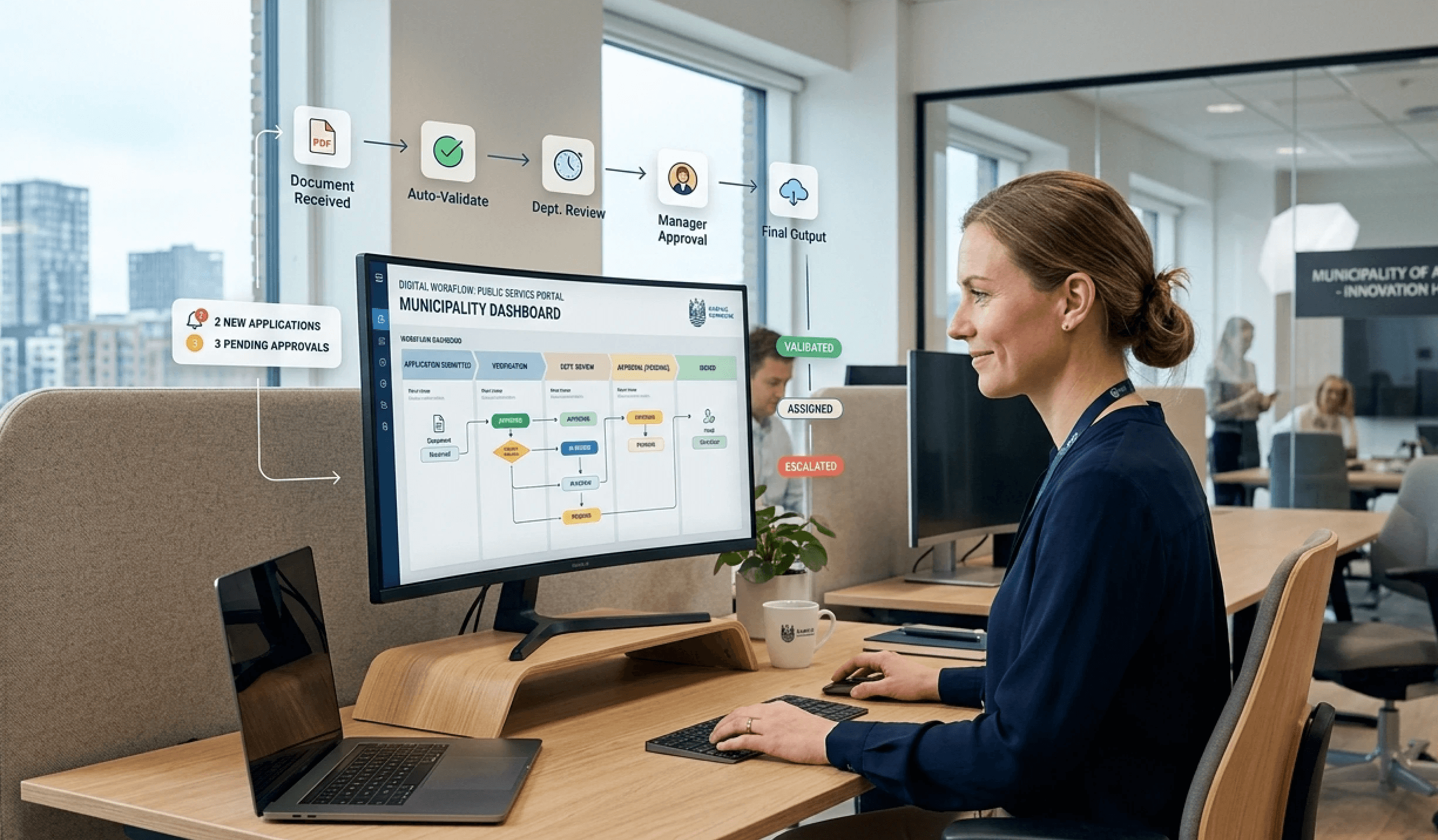


Internal communication in transport and logistics

The transport and logistics industry is built on movement. Goods need to get from A to B, routes must be planned, terminals must function, drivers must be kept informed, and warehouses must keep pace with changes in operations, staffing, and deliveries. When daily life is characterised by pace, rotating shifts, and employees spread across many locations, internal communication is not just a supporting function. It becomes a central part of operations.
For many transport and logistics companies, the challenge is not a lack of information. The challenge is that information is often scattered across emails, notice boards, messages, phone calls, document folders, and local procedures. This makes it difficult to ensure that all employees have access to the same knowledge at the right time.
A modern intranet can help consolidate communication, documents, employee information, and daily updates into a single digital workplace. Particularly in transport and logistics, where many employees do not sit at a computer, there is a need for solutions that are mobile, targeted, and easy to use in a busy working day.
What is internal communication in transport and logistics?
Internal communication in transport and logistics is about how the company shares vital knowledge, news, procedures, and operational information with employees across offices, warehouses, terminals, drivers, planners, operations, and management.
For example, it could be:
Information about changed routes, new safety procedures, updated workflows, operational disruptions, HR information, onboarding materials, shift schedules, terminal notices, or messages from management.
Good internal communication ensures that employees know what is happening, what is expected of them, and where they can find the information they need. In transport and logistics, this is particularly important because small misunderstandings can quickly impact operations, safety, customer service, and delivery times.
The biggest communication challenges in the transport and logistics industry
Transport and logistics companies often have a more complex workforce structure than many other industries. This places special demands on both internal communication and the intranet.
Deskless employees
A large proportion of employees in transport and logistics do not have a dedicated desk space. Drivers, warehouse workers, terminal staff, technicians, and operations personnel often work away from the office and rarely have the time or opportunity to log in to a traditional desktop solution.
If vital information is only sent by email or hosted on an intranet designed primarily for office staff, the company risks large parts of the employee group not being properly informed.
Therefore, a mobile intranet is essential. Employees must be able to access relevant news, documents, and messages from their phone or tablet, whether they are in the warehouse, in the lorry, at the terminal, or in transit between tasks.
Multiple locations and rotating shifts
Transport and logistics companies often operate across multiple locations. This can include head offices, warehouses, terminals, distribution centres, workshops, and local branches. At the same time, many employees work shifts or outside regular office hours.
This means that information cannot always be shared effectively through physical meetings or notice boards. A message given at a morning meeting does not necessarily reach the evening shift worker. A news update posted on a notice board in one terminal does not necessarily reach a driver starting their shift elsewhere.
An intranet for transport and logistics should therefore support targeted communication, so that employees receive information relevant to their role, department, location, or area of work.
Critical operational information that must go out quickly
In transport and logistics, changes can happen quickly. A delayed delivery, a changed route, a new customer procedure, or a temporary operational disruption can affect many employees within a short frame of time.
If information is shared through informal channels, uncertainty can quickly arise. Some employees get the message, others do not. Some get the latest version, while others work off outdated information.
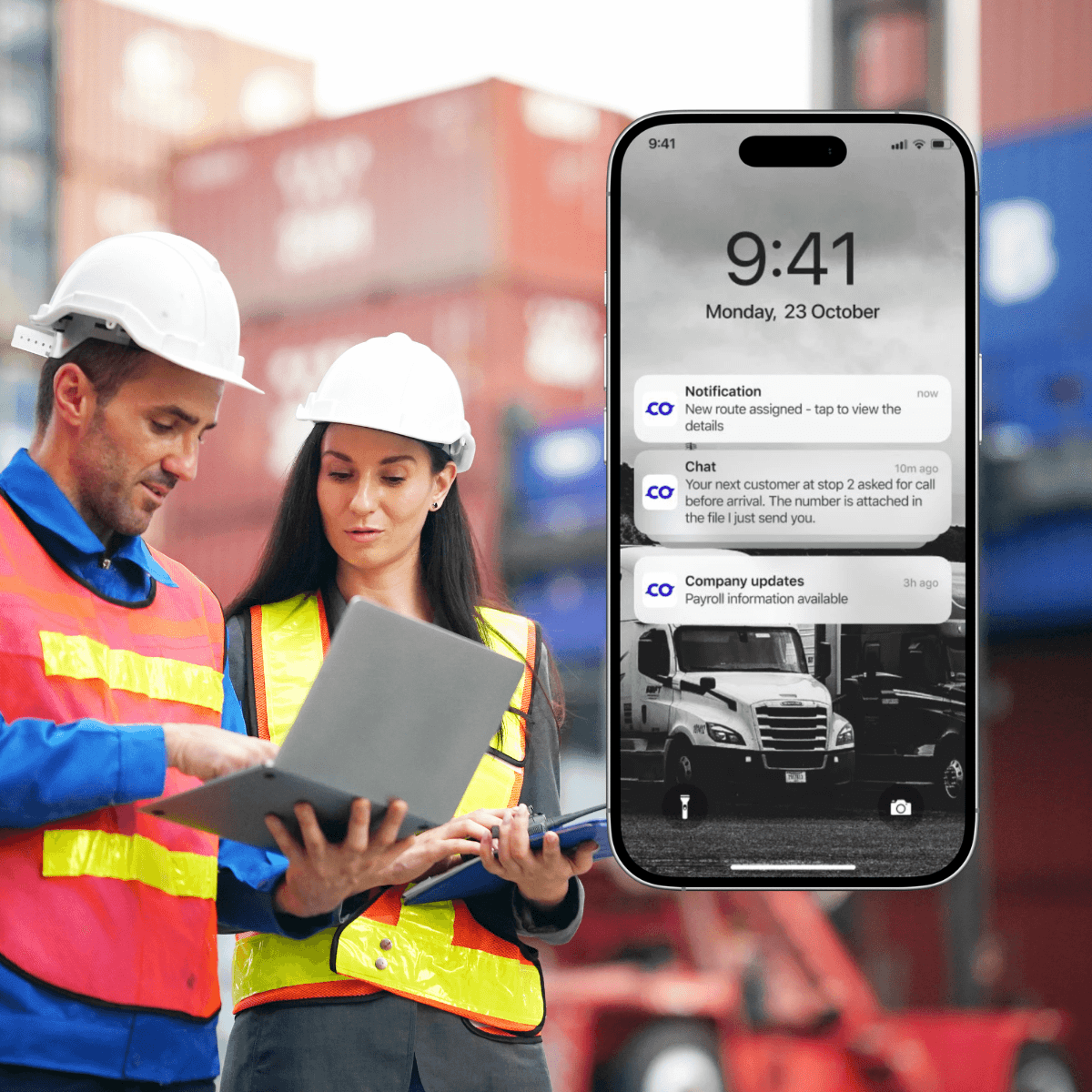
A modern intranet can help make operational information more structured. This can be done, for example, through targeted news, push notifications, or dedicated information areas where employees can always find the latest updates.
Safety, compliance, and procedures
The transport and logistics industry is heavily regulated by requirements for safety, documentation, working environment, quality, and compliance. This can involve everything from dangerous goods handling and working environment regulations to driving and rest times, terminal safety, loading, unloading, and internal procedures.
When procedures change, employees must be able to quickly find and understand the latest version. If old documents reside in folders, local drives, or printed versions, the risk of errors increases.
An intranet with document management and a powerful search function can make it easier to ensure that employees find correct instructions, guidelines, and safety procedures.
Information silos between office, warehouse, operations, and drivers
In many transport and logistics companies, natural information silos emerge. The office has one flow of information, the warehouse has another, operations a third, and drivers often receive information directly from planners or their immediate manager.
This can work on a day-to-day basis, but it can also create a distance between employee groups. When information is shared differently across the organisation, it can affect collaboration, engagement, and alignment with overall company goals.
An intranet can create a shared digital workplace where all employees have access to relevant knowledge, news, and updates. This does not mean everyone has to see the same information all the time. It means communication can be structured so that the right information reaches the right employees.
Onboarding new employees
Transport and logistics often involve many different roles, workflows, and safety requirements. New employees need to quickly understand the company, culture, procedures, and practical workflows.
If onboarding takes place primarily verbally or through scattered documents, quality can vary from department to department. This can make it harder for new employees to get off to a good start.
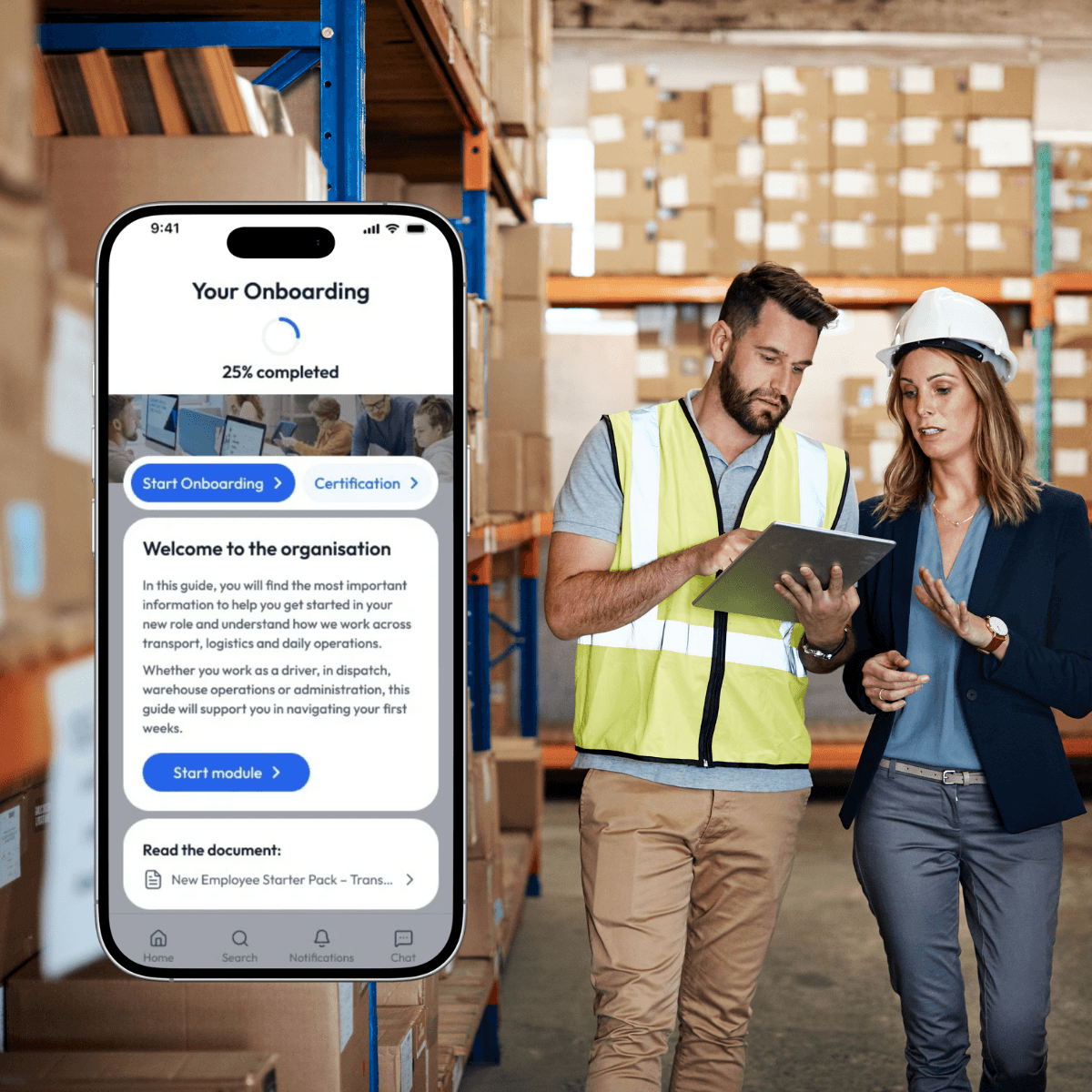
An onboarding portal on the intranet can consolidate introductions, videos, checklists, employee handbooks, safety information, and practical guides in one place. This provides a more consistent start and makes it easier for new employees to find answers when questions arise.
How can a modern intranet solve these challenges?
A modern intranet is not just a digital notice board. It is a unified platform for internal communication, knowledge sharing, employee engagement, and daily access to critical information.
Mobile access for frontline workers
For transport and logistics companies, mobile access is crucial. Drivers, warehouse workers, and terminal staff must be able to access the intranet directly from their mobiles.
This makes it possible to read news, find procedures, receive messages, view relevant documents, and stay updated without needing an office computer.
A mobile intranet can be particularly relevant for frontline workers, who are closest to operations but often furthest away from internal communication.

Targeted news and messages
Not all employees need the same information. A message about changes in a terminal might be important for warehouse and operations staff, but irrelevant to the finance department. An HR update might be relevant to everyone, while an operational update should only be sent to specific locations.
With targeted news, the company can ensure that employees receive information based on their role, department, location, or team. This makes communication more relevant and reduces digital noise.
Document management and updated procedures
Document management is a vital part of an intranet for transport and logistics. Employees must be able to find current procedures, safety instructions, quality documents, and employee handbooks without doubting which version is correct.
When documents are centralised in one place, it becomes easier to keep information updated and accessible to the entire organisation.
Search function that saves time
In a busy working day, information must be easy to find. A good search function allows employees to find answers quickly, whether they are looking for a loading procedure, an HR policy, a contact person, or guidelines for an internal system.
For employees in operations, warehousing, and transport, a powerful search function can save time and reduce dependency on always having to ask a colleague or manager.
Push notifications for critical information
Some information is more critical than other. In the event of urgent operational changes, safety updates, or time-sensitive announcements, push notifications can be an effective way to ensure employees are alerted to new information.
This could, for example, be relevant in the case of altered access conditions, delays, weather-related operational changes, or updated safety procedures.
Employee handbook and shared knowledge
A digital employee handbook can consolidate practical information about employment, absence, holidays, workwear, safety, IT, HR, and internal guidelines.
When the employee handbook is hosted on the intranet, it becomes easier to update and easier for employees to use. This creates more uniform access to information across the entire company.
Onboarding portal for new employees
An onboarding portal can give new employees a structured introduction to the company. It can contain welcome materials, checklists, videos, training modules, safety guides, and introductions to departments and key personnel.
In transport and logistics, this can be particularly valuable because employees often need to learn many practical procedures in a short space of time.
Two-way communication and feedback
Internal communication is not just about broadcasting information. It is also about fostering dialogue.
With an intranet, employees can have the opportunity to comment, ask questions, give feedback, or share day-to-day knowledge. This can boost engagement and give management better insights into what is happening on the ground in operations.
Concrete examples of intranet in daily work
An intranet only delivers value when it fits into employees' daily work. Here are some concrete examples from the transport and logistics industry.
In the warehouse
A warehouse worker clocks in for their evening shift and opens the intranet on their mobile. Here, they find a targeted message about altered picking routes for a specific customer. At the same time, the worker can quickly find the latest safety instructions for forklift use in a designated area.
This means that information does not depend on whether the worker attended a specific meeting or saw a physical notice.
For the driver
A driver receives a push notification about altered access conditions at a customer address. Instead of calling planning, the driver can open the intranet and see the updated guidelines with contact person, delivery point, and specific instructions.
This results in fewer interruptions, less uncertainty, and a better chance of completing the task correctly the first time.
In operations
An operations manager needs to inform employees at three terminals about a temporary change in staffing and workflow. Instead of sending multiple emails or calling around, the manager can publish a targeted news post to the relevant locations.
Employees receive the message directly, and the information remains accessible if they need to review it later.
In the office
Planners and administrators can use the intranet to share updated customer procedures, contact lists, internal guidelines, and shared news. This makes collaboration between office and operations more transparent and reduces the risk of knowledge being siloed with individual people.
During onboarding
A new employee gets access to a digital onboarding journey with introductions to the company, safety, workflows, contact persons, and practical information. This provides a more structured start and makes it easier to become confident in the role.
What should transport and logistics companies look for in an intranet?
When transport and logistics companies choose an intranet, the solution should support the reality in which employees operate.
An intranet for transport and logistics should ideally be able to:
Provide easy mobile access
Deskless employees must be able to use the intranet from a phone or tablet. Mobile access should not be an afterthought, but a core component of the solution.
Support targeted communication
The company must be able to send news and messages to specific departments, locations, employee groups, or roles. This makes communication more precise and relevant.
Centralise documents and procedures
Safety instructions, employee handbooks, HR policies, customer procedures, and operational documents must be easy to find and keep updated.
Feature a powerful search function
Employees must be able to find answers quickly. A good search function is crucial when information needs to be put into practice and not just archived.
Be able to send critical messages fast
Push notifications and alerts can be vital when information is urgent. This is particularly true for operational changes, safety updates, or practical messages for employees on the move.
Create dialogue between employees and management
A good intranet does not just support top-down communication. It also allows for feedback, questions, knowledge sharing, and employee engagement.
Be simple to maintain
If the intranet is too heavy to administer, it quickly loses value. The solution must be easy for communication teams, HR, managers, and local editors to work with.
From scattered information to a shared digital workplace
The transport and logistics industry needs internal communication that matches a fast-paced, mobile environment with many different employee groups.
A modern intranet can help unite the organisation across office, warehouse, terminal, operations, and driving environments. When information becomes easier to find, more targeted, and more accessible, it also becomes easier for employees to feel informed, involved, and capable of doing their jobs correctly.
For companies in transport and logistics, an intranet is therefore not just about technology. It is about creating a more coherent digital workplace where vital knowledge reaches the people who need to use it.
Colibo works with modern intranets and internal communication across industries, and we have gathered more insights on our dedicated industry page for transport and logistics. Here you can read more about how an intranet solution can support employee communication, mobile access, and engagement in an industry where information must move as fast as the operations themselves.
FAQ about intranet and internal communication in transport and logistics
What is internal communication in transport and logistics?
Internal communication in transport and logistics is the way the company shares information, news, procedures, and operational updates with employees across office, warehouse, terminal, drivers, planners, and management. The goal is to ensure that all employees have access to the right knowledge at the right time.
Why is an intranet important for transport and logistics companies?
An intranet is important for transport and logistics companies because employees often work in different locations, on rotating shifts, and without a fixed desk. An intranet consolidates news, documents, procedures, and employee information in one place, making information easier to find and share.
How do you reach deskless employees?
Deskless employees are best reached through a mobile intranet that can be accessed from a phone or tablet. This allows drivers, warehouse workers, terminal staff, and frontline employees to receive news, push notifications, and critical information, no matter where they are working.
How can an intranet improve safety and compliance?
An intranet can improve safety and compliance by centralising updated procedures, safety instructions, policies, and documentation in one place. This reduces the risk of employees using outdated documents or lacking access to crucial guidelines.
What should an intranet for transport and logistics be able to do?
An intranet for transport and logistics should support mobile access, targeted news, document management, a powerful search function, push notifications, an employee handbook, onboarding, and two-way communication. It must be easy to use for both office staff and frontline workers.
How can a mobile intranet help drivers and warehouse workers?
A mobile intranet helps drivers and warehouse workers by providing quick access to relevant messages, procedures, contact information, and operational updates directly from their mobile. This makes it easier to stay updated without needing a computer or having to contact the office for every piece of information.
How can Colibo help transport and logistics companies with internal communication?
Colibo can help transport and logistics companies consolidate internal communication, employee information, documents, and onboarding in one modern intranet solution. The platform can support mobile access, targeted communication, and a more coherent digital workplace across office, warehouse, operations, and driver environments.