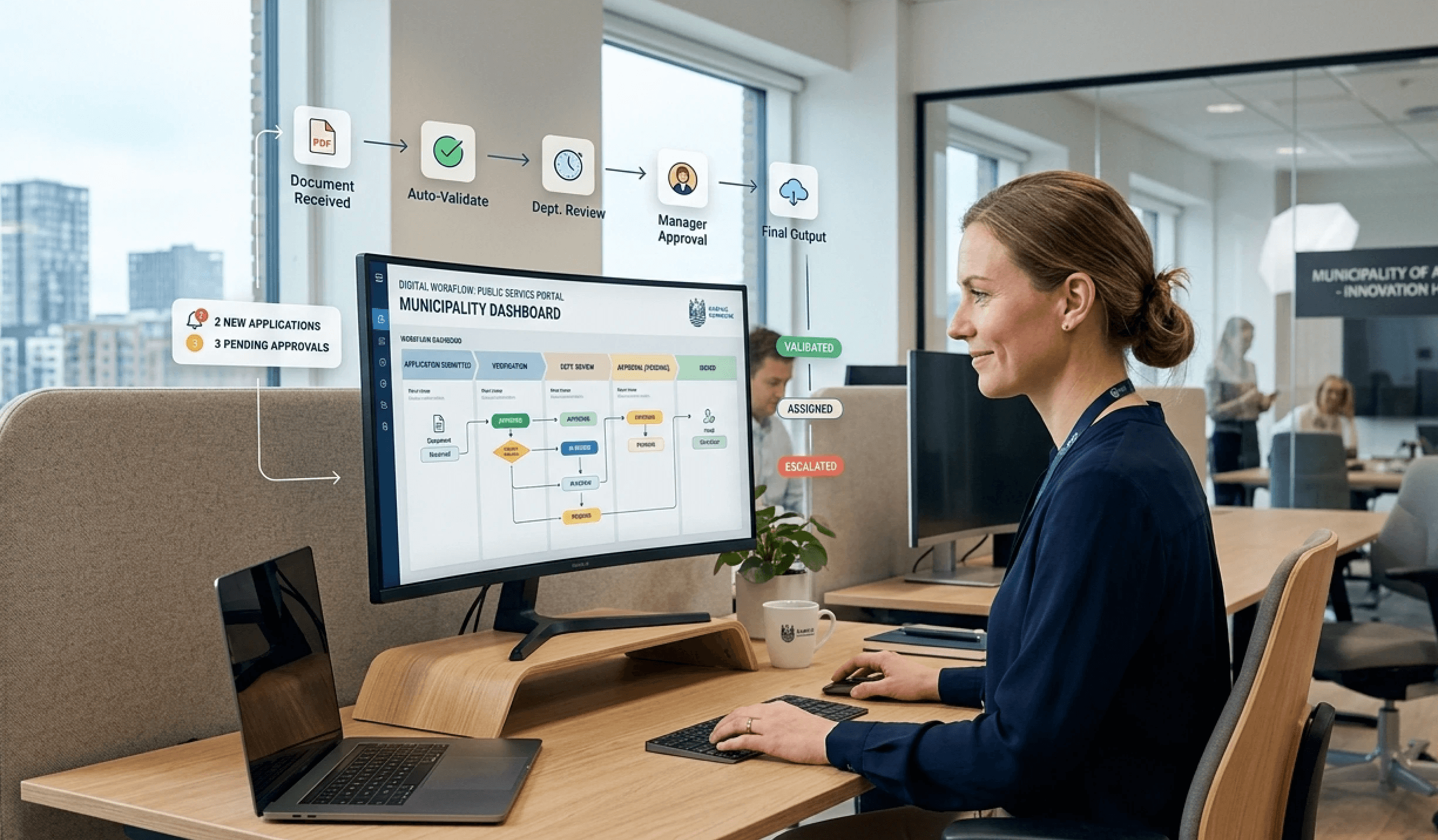


What is the best intranet for transport and logistics?
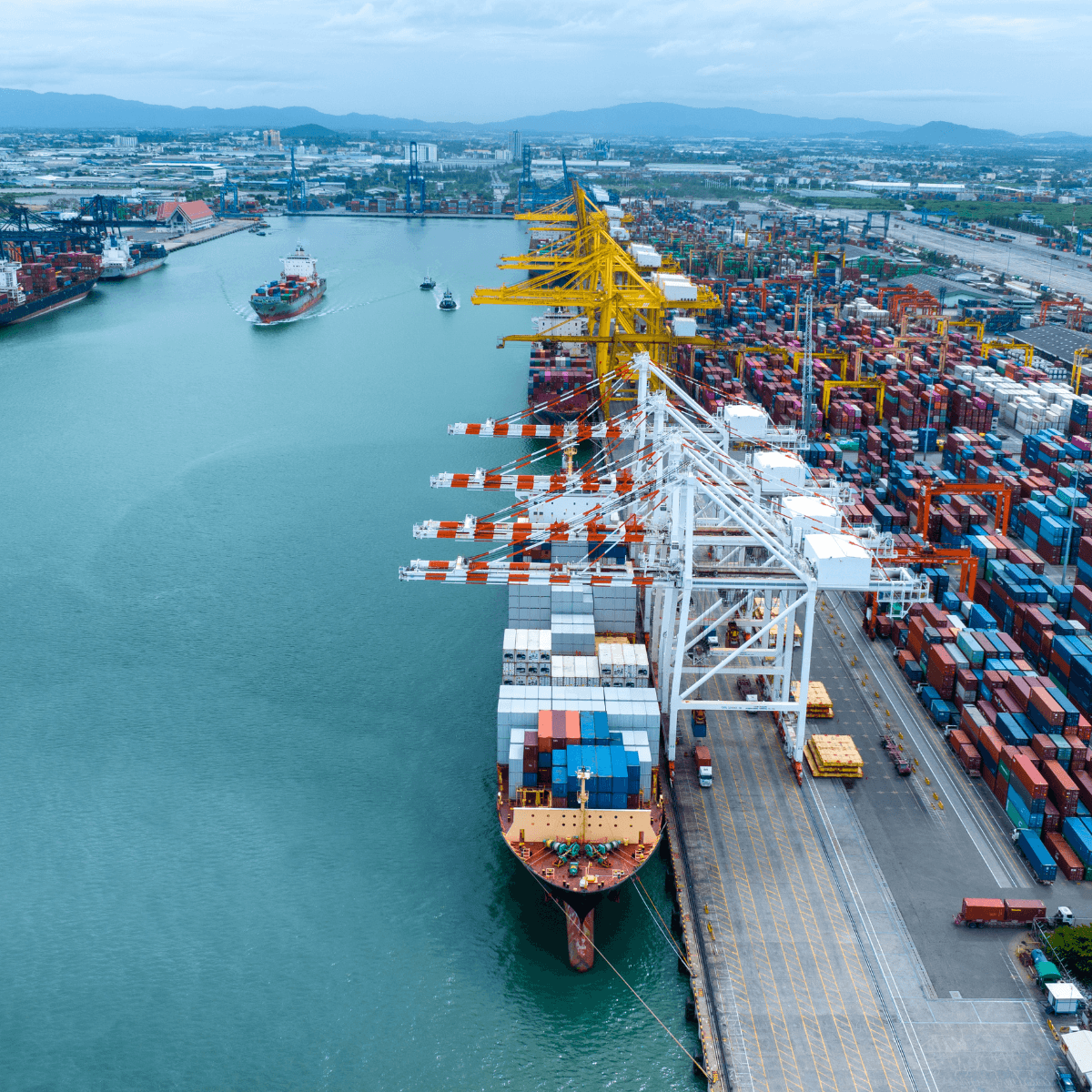
The best intranet for transport and logistics is rarely the most complex system. It is the solution that best addresses the industry's core challenges, especially when over 60% of employees typically work in frontline roles, and when information remains scattered across email, folders, Teams, SharePoint, and verbal handovers.
This is also why the question of "What is the best intranet for transport and logistics?" is often asked the wrong way. It is not about a single platform in an abstract sense. It is about which solution can actually reach drivers, warehouse teams, dispatchers, terminal workers, and office staff with the right information at the right time, without making their daily work heavier.
In practice, many transport companies struggle with the same symptoms. Operational messages are sent through multiple channels. Procedures exist in multiple versions. New employees learn through peer training and old PDFs. Drivers lack access to updated instructions from their mobile phones. And managers, HR, and dispatchers spend unnecessary time answering questions that should ideally be found in one place.
This makes a modern intranet more than just an internal notice board. In transport and logistics, the intranet must function as the workplace's shared point of reference. Otherwise, it simply becomes another system used by the office, while operations continue elsewhere.
The 7 biggest communication challenges in transport and logistics
Transport and logistics is an industry with high movement, many locations, and many roles. This makes internal communication far more demanding than in a traditional office organisation. When people work in shifts, in terminals, in warehouses, or out on the roads, traditional communication habits quickly break down.
This pattern is repeated in almost every company in the industry. Not because management lacks goodwill, but because workflows are scattered and the flow of information has often been built up layer by layer over time.
The recognisable pattern in the industry
The seven biggest challenges typically present themselves like this:
Deskless employees. Drivers, warehouse teams, and terminal workers are rarely logged into a stationary desktop computer all day. If information only lives on desktop, it will not reach everyone properly.
Scattered information. Operations, HR, safety, onboarding, and local procedures are stored in separate channels.
Lack of targeting. A dispatcher and a driver should not see the same content, yet many companies still send broad messages to everyone.
Version control chaos. The same procedure exists in old emails, local copies, and shared folders.
Long search times. Employees often know that the information exists somewhere, but not where.
Repetitive questions to key personnel. Managers, HR, and operations become living search engines.
Disconnect between office and frontline. The office believes that information has been published. The frontline feels that it is inaccessible.
The most tangible consequence is seen in search times. 67% of transport and logistics companies in Denmark experience lost time of up to 2.5 hours per employee per week searching in scattered systems, according to Transportmagasinet's analysis of search behaviour in the transport industry.
When information lives in five different places, a sixth place always emerges. That place is usually a colleague who gets asked again and again.
For companies looking to address this problem more systematically, there are also useful insights in Colibo's article on how internal communication in the transport industry can be improved.
Where the problems become costly in day-to-day operations
These challenges might sound administrative, but they are critical to operations. If a safety instruction is not updated, if a local procedure is hidden in an old folder, or if an important message fails to reach the right team, it directly impacts operations, quality, and the working environment.
A large proportion of employees in the sector also work on the move. Over 80% of employees in companies with at least ten employees in transport and logistics had mobile internet access for work purposes, according to Statistics Denmark on IT usage in companies. This supports a very practical point. The mobile phone is not an extra addition in transport. It is often the primary digital entry point.
Another issue is relevance. 74% of employees in the Danish transport sector receive only 1 out of 3 relevant messages when communication is not role- or location-based, according to DI Transport's industry analysis. This explains why many employees stop following internal channels closely. Not because they are against information, but because too much of it does not help them in their daily work.
Challenge | Practical consequence |
|---|---|
Scattered systems | Employees search instead of taking action |
No mobile access | Frontline is the last to be informed |
No targeting | Important messages get lost in the noise |
Multiple document versions | Errors and doubt in operations |
Dependency on key personnel | Bottlenecks in HR, operations, and management |
How a modern intranet solves the industry's core challenges
A modern intranet does not solve problems by adding yet another layer on top of existing systems. It only works when it becomes the shared digital workplace where employees start, search, and find current information.
This is particularly key in transport and logistics because the workforce is so diverse. Over 60% of employees in the Danish transport and logistics sector work in frontline roles, and traditional SharePoint intranets only achieve 15% adoption among these employees, according to Fellowmind's description of the LEMAN case. This is the clearest explanation of why many traditional intranet solutions fail to engage operations.
A shared digital workplace
What works is usually simple in its logic:
News and operational messages are consolidated in one place. Not in parallel emails, Teams threads, and notice boards.
Documents have a single, definitive home. Employees do not have to guess which version is correct.
Search becomes practical. Not an archive for editors, but a tool for operations and the frontline.
Mobile access is prioritised from the start. Not as an add-on module, but as standard behaviour.
Content is targeted by role and location. Drivers, dispatchers, and warehouse teams do not see the same things.
Practical rule: If a driver cannot find a procedure in under a minute from their mobile, then the solution is not good enough for the transport industry.
Many companies look first to SharePoint because it is already available in Microsoft 365. This can make sense as a document platform, but it is not the same as a powerful intranet. This distinction is well covered in the article on SharePoint vs. modern intranet for transport companies.
What typically works best in transport
The best setup in transport and logistics usually shares four characteristics.
Firstly, the user interface is simple. Not minimalist just for the sake of design, but simple enough for a new employee to quickly understand where news, contacts, procedures, and local notices live.
Secondly, the solution bridges the gap between the office and operations. When management, administration, and the frontline see information in the same structure, much of the classic divide between "those in the office" and "those in operations" disappears.
Thirdly, the intranet reduces reliance on key personnel. When HR policies, safety instructions, onboarding material, and local guidelines are easy to find, the volume of repetitive questions drops.
Fourthly, the platform acts as a communication layer on top of operations. It does not necessarily need to replace the TMS, HR system, or document platform. Its job is to centralise access, context, and communication.
In this type of setup, Colibo can be used as a stand-alone intranet platform with mobile access, targeted news, structured documents, AI-powered search, and integrations with systems like Microsoft 365 and Google Workspace. This is particularly relevant for organisations wanting an intranet that is not tied to a SharePoint architecture.
From chaos to control: a case study from a transport company
The most convincing picture rarely comes from a feature list. It comes from real companies where employees in offices, warehouses, terminals, and vehicles previously worked with information that was scattered everywhere.
In this project, news, safety instructions, HR documents, and operational procedures lived in emails, local drives, SharePoint folders, notice boards, and verbal handovers. No one lacked information in an absolute sense. The problem was that no one knew for sure which version was the correct one.
The challenge before the intranet
The biggest bottleneck was document access. Employees would often ask a manager, dispatcher, or colleague, even when the information actually existed somewhere within the organisation. This created both wasted search time and duplicate work.
Problems were particularly common around:
Safety instructions in multiple versions
HR documents saved locally in departments
Operational procedures forwarded as email attachments
Local guidelines without a clear owner
Onboarding material that varied from location to location
h3 id="94">
The three-step solution
The project was carried out in three simple but crucial steps.
Step 1 was mapping. The company identified the most critical document areas. Operations, safety, HR, onboarding, and local procedures were identified as the areas where a lack of structure caused the most friction.
Step 2 was cleanup. Duplicates, outdated versions, and unclear ownerships were removed. The goal was not to move everything. The goal was to define one single source of truth for each key document.
Step 3 was the new structure. Documents were organised by function, role, and location. A driver needed to find driver-relevant content. A dispatcher needed to find operational material. A local manager needed to be able to share a link to the correct version rather than emailing files around.
The turning point occurs when employees stop asking "do you have the latest version?" and instead know exactly where to find it.
What changed in practice
Following the implementation, employees spent less time searching for information. Managers and dispatchers experienced fewer repetitive questions about procedures, documents, and HR queries. Duplicate work decreased because the same documents were no longer being maintained in multiple places.
The most important result was not an attractive homepage. It was that the intranet became the company's shared reference point. This shift is often more valuable than any single feature because it changes behavior across the entire organisation.
When this type of implementation succeeds, it is usually because the project does not start with technology. It starts with three practical questions: Which documents create the most confusion, who lacks access today, and which questions get asked again and again to the same people?
Smart integrations that connect your digital workday
It is 05:12. An operations manager needs to send out an urgent message about changed delivery conditions, a driver needs the latest instruction on their mobile, and HR simultaneously needs new employees to be able to find onboarding material without calling the office. If information is scattered across email, Teams, folders, and line-of-business systems, people end up wasting time searching instead of running operations.
That is why integrations offer so much value in transport and logistics. The goal is not to merge everything into one system. The goal is to consolidate access, shortcuts, and context so employees can complete their tasks faster.
Integrations that deliver real value
The best integrations are usually the least flashy ones. They eliminate clicks, login issues, and manual steps.
Integration | Practical value |
|---|---|
Microsoft 365 | Consolidates access to documents, Teams, Outlook, and daily collaboration |
TMS | Provides quick access to operational links, views, and updates |
Document management | Ensures employees find the current version instead of local copies |
Single sign-on | Reduces login friction, especially for drivers and terminal workers |
Google Workspace | Unifies Drive, Docs, Calendar, and shared resources in one place |
In practice, I usually see the greatest impact in three areas.
First, access to documents. If quality procedures, safety instructions, and HR documents open directly from the intranet, the number of questions directed at administration quickly declines.
Second, TMS access. A good integration rarely means displaying the entire transport management system inside the intranet. It works better to use the intranet as an entry point, where dispatchers, managers, and drivers get the relevant links and messages for their specific role.
Finally, login. Single sign-on sounds technical, but its effect is highly practical. If a worker on the loading bay or in the driver's cab experiences multiple logins, multiple apps, and forgotten passwords, usage almost always drops.
This is also where Colibo typically makes sense. Not because the platform should replace your specialised systems, but because it can bind them together in a workspace that suits both desk-bound users and people on the go.
Integrations must also suit security and operations
Integrations must not only be easy to use. They must also fit the company's requirements for operations, access control, and data processing.
For many transport companies, this involves very concrete questions: Where is data stored, who can see what, how is access managed when staff change roles, and how vulnerable do operations become if one system fails? This is particularly relevant when the intranet centralises HR information, staff handbooks, operational documents, and links to operational systems.
BusinessWith's review of the intranet market also highlights that companies increasingly evaluate intranet solutions based on documented security and compliance. This evaluation should not be left to IT alone. Operations, HR, and management should be involved, as integration choices directly affect daily work.
The right evaluation is simple: Does the integration make work easier for the employees who need to use it every day, and can the solution simultaneously meet the company's standards for security, governance, and stable operations?
How to measure success and ROI on your new intranet
Monday at 05:20, an important operational message is sent to drivers, terminal workers, and planners. If half of them only see it hours later, you do not just have a communication problem on paper. You have an operational problem involving delays, extra phone calls, and unnecessary mistakes.
Therefore, an intranet in transport and logistics must be measured by whether it makes work easier in a day-to-day reality of people on the move, changing shifts, and multiple locations. Visitor numbers alone say very little. The interest lies in whether messages reach the right employees, whether documents are found quickly, and whether managers, HR, and operations are relieved of administrative burdens.
The KPIs that actually matter
Start with KPIs that can be linked directly to concrete workflows:
Active users and login frequency. Segmented by mobile and desktop, so you can see if the frontline is actually engaged.
Read rates on targeted messages. Especially regarding operational changes, safety, compliance, and HR.
Time to first view. Relevant when information needs to be used during the same shift, not the following day.
Use of search, shortcuts, and quick access links. Demonstrates whether employees can find what they need on their own.
Number of repetitive questions to HR, operations, and local managers. A practical indicator of whether information has become easier to access.
Use of central documents instead of local copies. Shows whether the intranet has become the actual source of truth for current information.
Feedback from operations staff. Short comments from drivers, terminal managers, and team leaders are often worth more than impressive total numbers.
Many companies still measure too broadly. They look at overall traffic and conclude that the solution is being used. This picture is too simplistic. If office employees account for most of the activity, while drivers and warehouse teams barely open the platform, the adoption is unbalanced. If so, you have not solved the most critical part of the challenge.
This is also why role-based communication must be included in the measurement. A high read rate on a broad news item is worth less than a precise message that is quickly seen by the employees who need to react. If you want to work more concretely with features that support this type of usage, you can look closer at the 7 intranet features transport companies should prioritise.
High activity is not the same as high value. Value is created when fewer employees are looking for answers, and more are taking the correct action first time around.
What a healthy measurement dashboard looks like
A healthy measurement dashboard in the transport industry typically consists of five tracks that should be monitored simultaneously.
Firstly, the frontline uses the solution regularly from mobile devices. Not just at launch, but also after three and six months. Secondly, critical messages are quickly viewed by the teams responsible for acting on them. Thirdly, the volume of interruptions to key personnel drops because answers are already in one place. Fourthly, employees open procedures and staff information on the intranet instead of searching through emails, printouts, or old folders. Fifthly, operations managers confirm that they spend less time sending out the same information multiple times.
A simple measurement framework might look like this:
Focus area | What should be investigated |
|---|---|
Adoption | Do frontline and office staff use the solution regularly |
Reach | Do the right teams see the right messages |
Efficiency | Do employees find procedures and contacts faster |
Relief | Do key personnel receive fewer repetitive questions |
Operational use | Is the intranet used in daily task-solving, not just as a notice board |
ROI often becomes most apparent when tracking time spent and daily friction closely. If a terminal manager saves 20 minutes a day due to fewer clarifying questions, or if HR receives fewer queries regarding holiday, rules, and documents, the value is felt quickly. In transport and logistics, it is these types of improvements that make the difference. Less search time, fewer misunderstandings, and faster access to correct information.
Checklist for choosing the right intranet for your company
When a transport company needs to choose a new intranet, it is tempting to compare long lists of features. This rarely yields the right answer. The best evaluation comes from testing whether the platform can solve the concrete communication challenges the company already faces.
This is where many choices fall short. Not because the systems are poor, but because they are too heavy, too office-centric, or too technically reliant on a setup that does not suit operations.
Seven questions that filter options quickly
Use these questions during the selection process:
Can the frontline use it without formal training. If drivers and warehouse teams need help every time, the solution will not last.
Is the mobile experience strong enough for daily use. Not just responsive, but genuinely practical.
Can news and messages be targeted by role, team, and location. Otherwise, information becomes overwhelming and noisy.
Is there a single, clear structure for documents and procedures. Version control chaos must not be migrated over.
<200">
Does the platform support effortless access. Single sign-on and easy login make a big difference in practice.
Does the hosting and security setup meet the company's requirements. This applies especially to data sovereignty and compliance.
Can the solution integrate with the systems employees already use. Microsoft 365, Google Workspace, document environments, and relevant business systems.
For companies wishing to look at this in more detail, there are several relevant points in the review of 7 intranet features transport companies should prioritise.
Making the final choice
The right choice is rarely the platform that can do the most on paper. It is the platform that creates the least friction in reality.
A good vendor should be able to answer the following clearly:
How does the solution reach workers without a fixed PC
How are documents consolidated without creating new duplicate work
How is communication targeted to the correct groups
How is mobile use supported in changing work environments
How are security, operations, and hosting managed
How are adoption and business value measured after launch
How do we avoid the intranet becoming just another system alongside the others
An intranet for transport and logistics should be evaluated as an operational tool. Not as a communication project alone.
When these questions are answered satisfactorily, the decision becomes simpler. The intranet then becomes more than just an internal channel, transforming into a work tool that unites the organisation across locations, roles, and shifts.
If your company needs an intranet that unifies internal communication, documents, mobile access, and integrations in a single solution, it may be relevant to look closer at Colibo. The platform is developed for organisations with complex requirements and can be used as a standalone intranet solution or alongside existing environments such as Microsoft 365 and Google Workspace.